
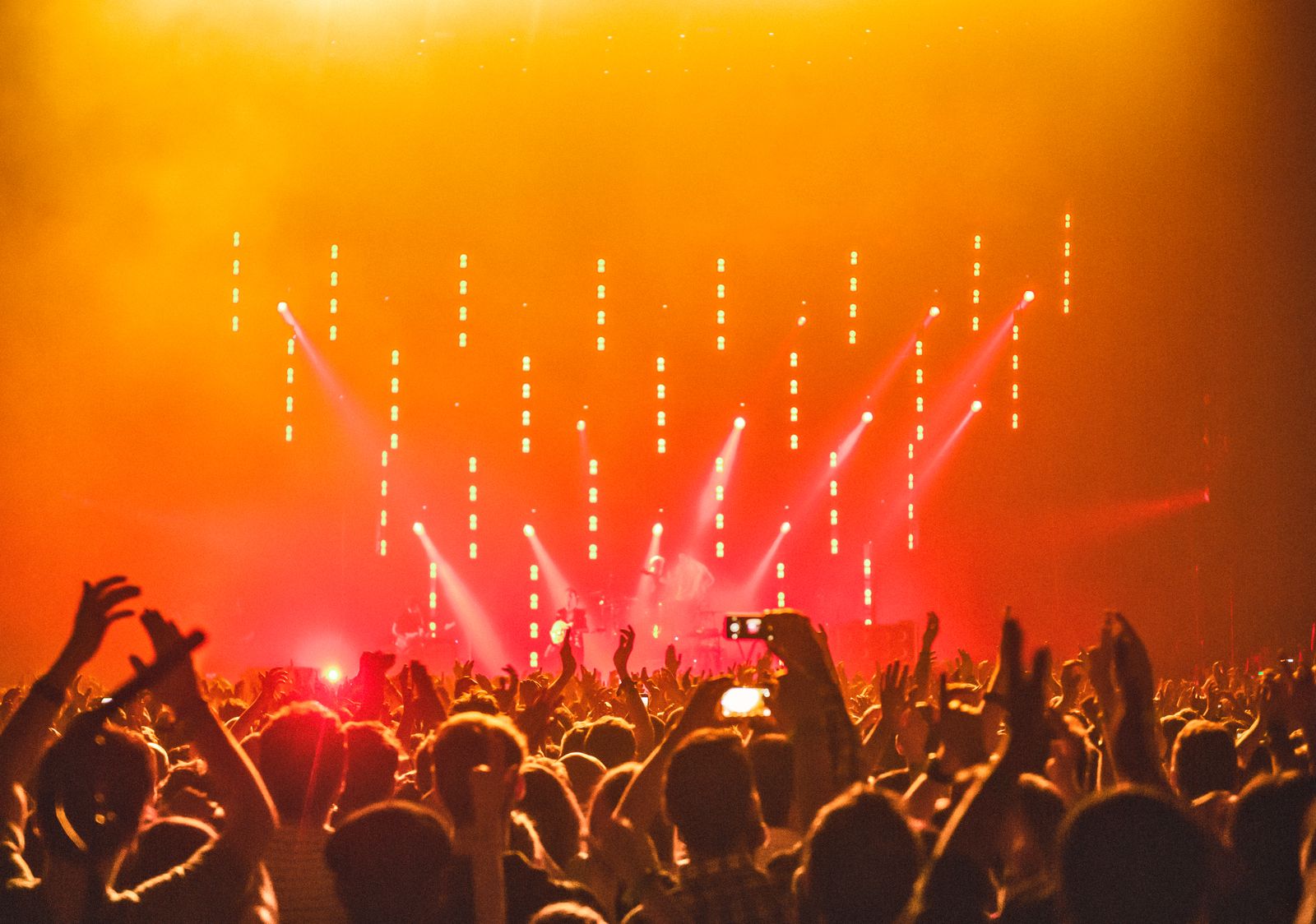
*Series: UX Beyond the Screen — Audience Experience in Live Events (Part 1 of 4)*
I have spent fifteen years designing experiences that live behind glass — web apps, dashboards, e-commerce funnels. But every time I stand in a festival queue, tap a stadium turnstile, or fumble with a theatre’s PDF ticket in the rain, I ask myself the same professional question: who designed this journey? And more often than not, the honest answer seems to be: nobody, at least not as a whole.
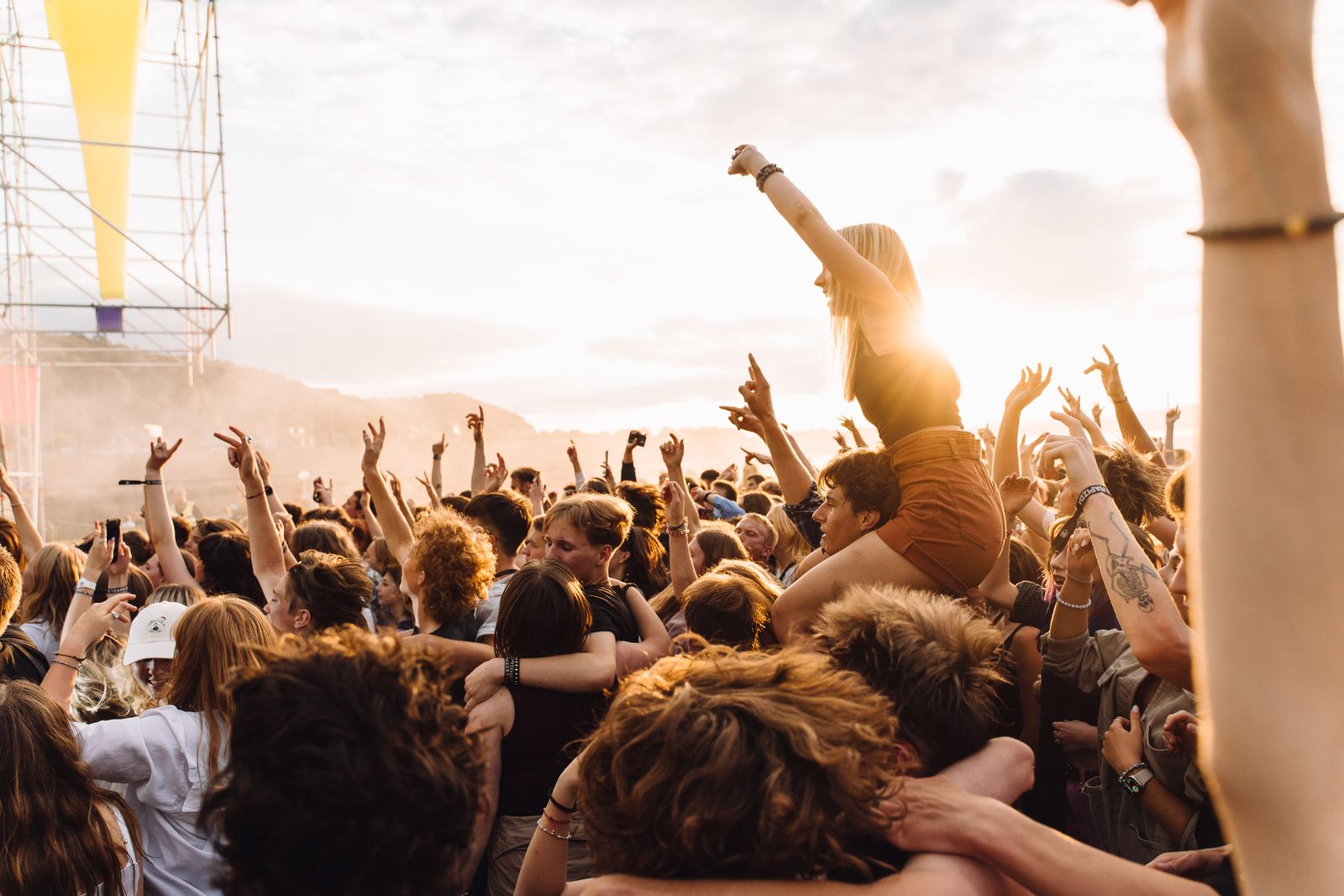
This series is my attempt to take that question seriously. How much is user experience really considered in performing arts, festivals, and sports tournaments? Who designs the touchpoints — digital and physical — where an audience meets an event? How is that experience measured today, and how could new AI methods measure it better? And finally: does this industry need something like a UX architect?
Before arguing anything, we need a shared vocabulary, because academia has been circling this territory for decades under names most UX practitioners have never heard.
## The terminology map: from servicescape to experiencescape
The founding concept is the **servicescape**, coined by Mary Jo Bitner in 1992 to describe the designed physical environment of a service — atmosphere, spatial layout, signs, symbols, and artifacts that shape how customers feel and behave. It is, in effect, the built world’s answer to what we call an interface.
The events world then forked the concept, much like open-source projects fork a repository:
– **Festivalscape** — proposed by Lee, Lee, Lee and Babin (2008) in the *Journal of Business Research*, identifying environmental cues such as convenience, staff, information, program content, facilities, souvenirs and food quality, and linking them to attendees’ emotions, satisfaction and loyalty. Notably, program content emerged as the strongest driver of positive emotion — content is king offline, too.
– **Sportscape** — the stadium-specific variant (Wakefield and colleagues in the 1990s; Lambrecht, Kaefer and Ramenofsky, 2009), covering sightlines, seating comfort, scoreboard quality, accessibility and crowd flow, and their effect on spectator attendance and satisfaction.
– **Eventscape** — a broader framing describing how places and environmental resources are transformed to stage events (Brown et al., 2015), often used in discussions of event legacies and place-making.
– **Experiencescape** — the most recent evolution. A longitudinal study of Japan’s Fuji Rock Festival found the festival experiencescape consists of three dimensions — physical settings, the socio-cultural environment, and service/management factors — and that it constantly evolves as festivalgoers’ attention shifts across travel phases. In UX language: the experience is a journey with pre-, during- and post-event stages, not a single session.
Rosenbaum and Massiah (2011) later expanded the servicescape into four dimensions — physical, social, socially symbolic, and natural — which maps surprisingly well onto how we think about product ecosystems: the UI, the community, the brand meaning, and the context of use.
## So is UX “considered”? Yes — but fragmented and mostly retrospective
Reading this literature as a practitioner, two things strike me.
First, the audience experience is studied intensely — but mostly *after the fact*, through surveys and structural equation models. The dominant research framework is Stimulus–Organism–Response (S-O-R): environmental stimuli (the festivalscape) trigger internal emotional states, which produce behavioral responses like satisfaction, loyalty and revisit intention. A recent study of music events found that visual and symbolic design, ambient conditions, and engagement opportunities significantly enhance satisfaction, while spatial functionality and social atmosphere had weaker effects. That is genuinely useful — but it is analytics, not design. It tells you what correlated with satisfaction last year; it does not prototype next year’s entry flow.
Second, the field has rich descriptive theory but thin design practice. There is no widely adopted equivalent of a design system, a journey map standard, or a usability heuristic set for live events. The vocabulary exists in tourism and event-management journals; the *methods* of UX — research ops, iterative prototyping, accessibility audits, service blueprints — appear only sporadically.
## The gap this series explores
In digital products, we long ago accepted that experience does not happen by accident: someone owns it, researches it, designs it, measures it, and iterates. In live events, the experience is arguably the *entire product* — Pine and Gilmore built the whole “experience economy” thesis on that idea — and yet ownership of it is scattered across producers, venue operators, ticketing vendors, sponsors and artists.
In Part 2, I will map exactly who designs and who decides the audience-facing processes of a festival, a theatre production and a sports tournament — and where the gaps between those owners swallow the experience. Part 3 turns to measurement, and how computer vision, emotion AI and real-time feedback systems are starting to give live events something they have never had: telemetry. Part 4 makes the case (and the counter-case) for a UX architect role in this industry.
If you have ever missed the opening act because the entry queue was designed by nobody, this series is for you.
—
*References: Bitner (1992), Journal of Marketing; Lee, Lee, Lee & Babin (2008), Journal of Business Research; Rosenbaum & Massiah (2011); Lambrecht, Kaefer & Ramenofsky (2009), Sport Marketing Quarterly; Brown et al. (2015); “Festival Experiencescape: The Coexistence of Tangibility and Intangibility” (Fuji Rock study); Chen et al. (2019), International Journal of Tourism Research; Pine & Gilmore (1999), The Experience Economy.*